
What My Twin Sister Taught Me About Team Alignment (The Hard Way)
A few years ago, a long-standing client asked me if I could help their team operate better together. I immediately said yes … and then told them I'd need to bring in a partner.
That partner was my twin sister, Tracy.
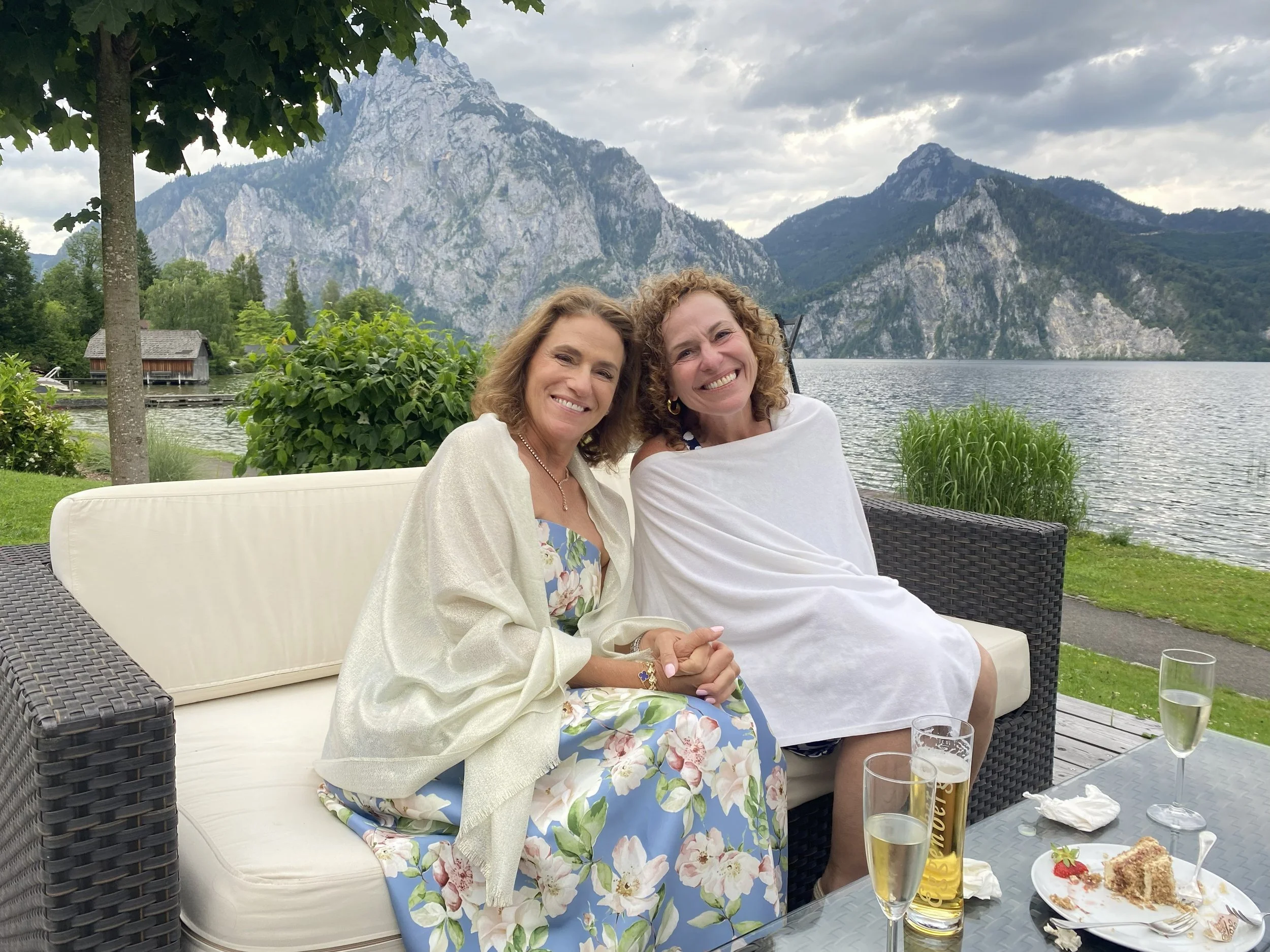
I had no doubt we could deliver great work for the client. Tracy had spent three decades facilitating groups as she conducted qualitative research and guiding clients through brainstorming and branding sessions. I came from a different world — recruiting, assessing talent, facilitating tricky conversations between colleagues in conflict with one another, and focusing on optimizing performance. Together, our skill sets were exactly what the project required.
What gave us pause was actually more personal: we'd never actually worked together, sister to sister, in a professional setting. We knew we shared the same work ethic so we would both contribute equally to the work, but we’re fraternal twins with very different personalities. We weren't sure how that would play out once we were in it together, day to day, on the same project.
We knew we could make a difference for this client but we weren’t sure what might emerge from our varied perspectives and approaches. Would we struggle with frustrations or have to tiptoe around each other to keep the peace? We decided to find out!
The Assessment That Explained Everything
Early in the project, the team we were working with completed the DISC personality assessment as part of the engagement. Tracy and I decided to take it too, mostly so we could understand what our group members were learning about themselves.
We were AMAZED at what we learned about ourselves and our work styles.
It turned out the exact traits that made us effective professionals were the same traits that made us struggle as sisters. In the language of the DISC, I'm a capital D with a lowercase i — meaning I’m decisive, direct, motivated to get to the point and then move on to get a result.
In contrast, Tracy is a capital I with a lowercase d — meaning she is driven first and foremost to ensure collaboration, to make sure everyone in the room feels heard, to cultivate cooperation and THEN to land on a decision.
Neither instinct is wrong but put them in a room together - whether that’s on a Zoom call or sitting at a kitchen table during the holidays - and they will often collide.
Here’s what we realized: the frequent occasions where I would cut Tracy off mid-thought because I'd already gotten the info I needed would immediately cause Tracy to feel disrespected. Of course, I never meant to disrespect her, but that's exactly how "capital I" personalities experience being interrupted. I wasn't trying to undermine her; I was simply trying to be efficient and use limited data to make a decision. But, as many of us know, intention and impact aren't always in sync. Until we understood what was happening between us and had language to describe it, we just kept tripping over and frustrating each other.
The Fateful Zoom + Our Secret Signal
Not long after we completed the assessment, Tracy was leading a “discovery” discussion on zoom with some group members. She asked me "Will you let me lead this without interrupting? If you want to weigh in, just give me a signal,” and the signal we agreed upon was me putting a finger on my cheek.
Five minutes into the zoom, I signaled. She smiled a little and kept going with her line of questioning. Another five minutes went by, which felt like an eternity. I signaled again a few times, with increasing insistence. Nothing. Finally, around the fifteen-minute mark, I’d been tapping on my cheek for so long that I’m sure the client wondered if there was something wrong with me! Finally, Tracy said with a laugh, "Tammy, is there something you'd like to add?"
Afterward, I acknowledged to her — without fully realizing the significance — "That was a genuinely great interview." We repeated the same strategy for our next meeting, and, again, the discussion produced amazing results. That's when Tracy pointed out the pattern: every time I'd let her run the conversation her way, enabling her to allow the discussion to unfold, the result was way better than when I'd pushed things to move faster.
Our two different approaches, used in the right situations, produced something neither of us could deliver alone.
The Real Lesson For Teams
What Tracy and I stumbled into — through a personality assessment, some friction, and a slightly ridiculous cheek-tapping signal — is something we now see constantly in the teams we work with: most communication conflicts aren't a values problem, they’re just caused by an unrecognized difference in approach.
People who move quickly aren't intending to dismiss the people who want more dialogue. People who want everyone heard aren't slowing things down out of indecision. They're operating from genuinely different — and genuinely valuable — motivators. Left unexamined, those differences appear as disrespect, indecisiveness, and annoyance. Once named and understood, they become a team's unique strength.
That's really the throughline in the work that Tracy and I now do together. Before we ever run an offsite with a team, we spend considerable time in advance understanding what's happening underneath the surface — not just what people say is the problem, but also learning how they're each wired to communicate, collaborate and make decisions. It's rarely as simple as "this team doesn't get along." More often, it's a handful of very capable people with default styles that create obstacles with each other.
If this sounds familiar — a team that's smart, committed, and still somehow misaligned — it's usually not a people problem. It's a communication and approach problem, and it's fixable once you can see it clearly. Addressing these issues requires you to get underneath the friction, build shared language for how team members actually work, and turn that clarity into a practical plan the team can run with.
Tracy and I addressed our sisterly friction by finally understanding what each of us needed to feel respected and productive — and then building subtle practices (yes, even a finger on the cheek) around that understanding.
Most teams need the same thing: more clarity about what's actually going on.