
What the Knicks Just Taught All of Us About Followership
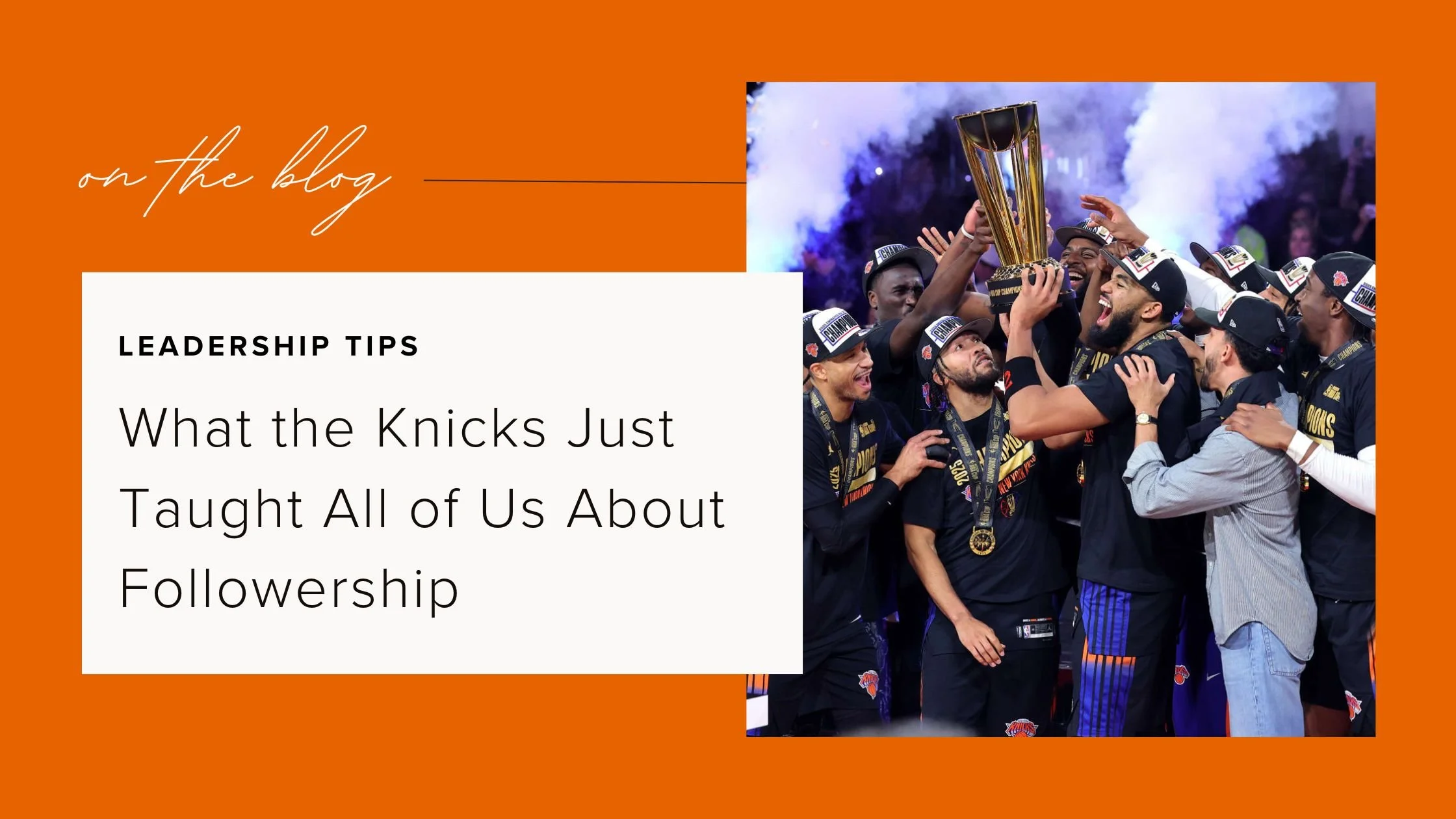
Even though they’ve already had their parade, I’m still thinking about the Knicks’ NBA championship win. I mean, as a born and raised New Yorker, I have been waiting 53 years for this!
When Jalen Brunson's final basket sealed the Knicks' championship win over the San Antonio Spurs on June 13th, NYC (and our viewing party) erupted in cheers. The drought is over! New York has its first NBA title since 1973 and if you'll indulge me for a moment, I want to talk about why I think this happened.
What I watched this postseason was a masterclass in followership and it has everything to do with what separates good leaders from truly great ones.
Why People Follow And Why They Stop
Let's start with a question I ask leaders in boardrooms all the time: Do your people actually want to follow you?
I’m not asking them "Do they do what you ask?" or “Do they show up?" I’m asking “Do they genuinely want to hear what you have to say next and do they trust your vision? Are they leaning in or tuning out?”
Real followership happens when a leader is specific about where the team is headed and makes each person feel certain about their role in getting there.
Jalen Brunson Leads from the Front. His Team Leads from Behind.
Here's what was so striking about this Knicks run: Brunson was the star, averaging over 32 points per game in the Finals. But this team didn't win because of one man's heroics. They won because every single player understood the mission and understood their role within the mission.
Think about OG Anunoby and Mikal Bridges. These are not players trying to steal the spotlight. They're players who know exactly what they bring, where they're needed, and how to execute in the moments that count. OG's game-winning putback in Game 4 — the largest comeback in NBA Finals history — happened because he was exactly where he was supposed to be.
That's followership in its purest form.
The best leaders often share the limelight with their team, and in doing so let their people be out in front. They position them for success and guide them toward the spaces they need to fill. The leader holds the vision so the team can focus on execution.
That's exactly what Jalen Brunson did, while he executed with them.
Clarity Is What Made This Team Unstoppable
This Knicks team never seemed rattled, even when they trailed by double digits.
It was clear they had an anchor. The focus was on the nextpossession, next play. Coach Mike Brown's message was just as clear: possession over outcome. He didn’t give a five-minute speech or create a complicated system. He gave a point of view which the team delivered with total conviction, supported by consistent behavior.
Precise and concise is critical. This is what I mean when I talk about Point of View, Plus Two — or POV + 2.
The premise is simple: when you want your message heard, lead first with your brief point of view, and then give two pieces of evidence to support it. That's it! Resist the urge to data dump or share wandering narratives.
When a leader does this well — when they say here's what I think, and here's why — people know where they're going. They understand their role in getting there.
The Moment You Lose the Room
I've watched talented executives lose their audience in under three minutes because they started with context instead of conviction. They tell the why before the what. They walk people through their research before telling them the point. They hedge and over-explain. And by the time they get to the recommendation, half the room is thinking about lunch.
The Knicks never had that problem this postseason. When they were down 29 points in Game 4, nobody panicked. Nobody started showboating. The direction and roles remained clear. The trust had been built over months of consistent, direct communication.
In your organization, every time you go into a meeting without a clear point of view, you risk a kind of slow unraveling. People gradually stop leaning in and before long, the energy and the attention in the room is gone.
Clarity is what keeps people present and operating with conviction.
What This Means for You
You don't have to be coaching an NBA team to apply these lessons. Whether you're running a company, leading a division, or simply trying to get your team aligned on a quarterly initiative, the principles are the same.
First: Be clear about where you're going and the purpose behind the strategy. Not flowery mission statements that aren’t tied to actions. You need to be vivid, specific,and I-can-picture-it clear. Your people need to be able to see the destination before they can commit to the journey.
Second: Make each person's role in that journey equally clear. When people know how their specific contribution connects to the bigger goal, they show up differently. They're part of something.
Third: Lead with your point of view. Stop building to your conclusion and start with it. Give people two anchors so it makes total sense — two reasons, two data points, two examples — and then trust them to follow. Restraint and clarity read as confidence, and confidence earns trust.
And when the moment comes — when you're down 29 points and everyone is watching to see how you respond — your team will know exactly what to do next.
Let's Build This Together
I work with leaders and executive teams to put these principles into practice through my POV + 2 workshops — tailored sessions where we apply the framework directly to your organization's specific challenges, communication culture, and goals.
Whether you're trying to align a senior leadership team, energize a group that's been checking out, or simply show up with more clarity and command in high-stakes rooms, this work makes a real difference.
If you're ready to lead the kind of team that doesn't flinch when the pressure is on, I'd love to connect.